Benzodiazepine Rehab in New Jersey
Benzo addiction often starts with a real prescription for anxiety, panic, or sleep. Over weeks or months, the medication that once helped can start to run your life, and stopping on your own can be dangerous. Recovery is possible with the right medical and therapeutic support, and that’s what benzo rehab at Discovery Institute is built to provide.
Our residential treatment program in Marlboro helps adults step away from benzodiazepines safely and learn other ways to manage the anxiety, stress, or sleep problems that often sit underneath. Care starts with a medically supervised taper in detox, then moves into therapy, treatment for co-occurring mental health conditions, and a plan for life after rehab. With no more than nine clients in residence at a time, your care team gets to know you, not just your diagnosis.
If you’re trying to figure out next steps for yourself or someone you love, our admissions team can walk you through what treatment involves. Call (732) 333-3167. Admissions is open 24/7.
What Is Benzo Addiction?
Benzo addiction, known clinically as sedative, hypnotic, or anxiolytic use disorder, means continuing to use benzodiazepines even when they’re causing harm. It isn’t a character flaw. Benzos calm the brain by boosting GABA, a chemical messenger that slows nerve activity. With steady use, the brain adjusts and starts to rely on the drug to feel calm at all.
That adjustment can happen faster than most people expect. The FDA warns that physical dependence can develop when benzos are taken steadily for several days to weeks, even exactly as prescribed (1). Dependence isn’t the same as addiction, but it’s often where addiction begins: you need more for the same effect, you feel worse without it, and using shifts from treating anxiety to avoiding withdrawal.
Types of Benzodiazepines We Treat
Discovery treats dependence on and addiction to the full range of benzodiazepines, including:
- Alprazolam (Xanax): Short-acting and fast-working, often prescribed for panic disorder, and one of the most commonly misused
- Clonazepam (Klonopin): Longer-acting, prescribed for panic disorder and seizures
- Lorazepam (Ativan): Prescribed for anxiety and sometimes used in hospitals before procedures
- Diazepam (Valium): Long-acting, prescribed for anxiety, muscle spasms, and alcohol withdrawal
- Other benzos: Including chlordiazepoxide (Librium) and temazepam (Restoril)
Many people who misuse benzos also drink or use opioids. That combination slows breathing and raises the risk of overdose sharply, so your treatment plan accounts for everything you’ve been using. Our benzodiazepine addiction treatment page covers how benzo misuse develops and affects the body in more depth.
Signs You May Need Benzo Rehab
If benzos feel harder to go without than they used to, that alone is worth talking about. Because many people start with a prescription, the line between treatment and a problem can be hard to see. Common signs include:
- Taking more than prescribed, or running out of medication early
- Getting prescriptions from more than one doctor, or buying pills from friends or the street
- Feeling anxious, shaky, or unable to sleep when a dose is late
- Needing a higher dose to get the same calming effect
- Drowsiness, slurred speech, memory gaps, or poor coordination
- Mixing benzos with alcohol or opioids
- Trying to cut back or stop and not being able to
- Pulling away from work, family, or activities once enjoyed
If you see several of these signs in yourself or a loved one, a treatment professional can help you sort out what level of care makes sense. If someone is very hard to wake or is breathing slowly, call 911.
Do You Need Benzo Detox Before Rehab?
In most cases, yes. If you’ve been taking benzos regularly, stopping suddenly or cutting back too fast can cause serious withdrawal, including seizures, which can be life-threatening (1). That’s different from many other drugs, and it’s the main reason benzo recovery shouldn’t start at home.
The safer approach is a gradual taper: lowering the dose step by step under medical supervision so the brain can adjust. There’s no single schedule that fits everyone, so the pace depends on which benzo you’ve used, how much, for how long, and what else you’ve been taking.
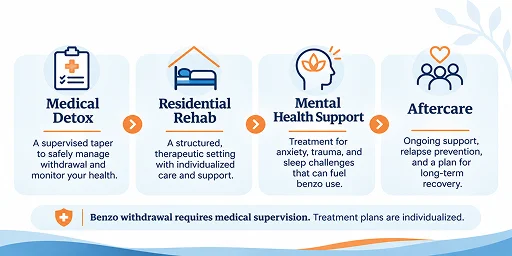
Our benzo detox program in New Jersey provides 24/7 medical care during this stage, with wearable monitoring that helps nurses spot changes in heart rate or early warning signs quickly. Once you’re medically stable, you move into residential rehab with the same team.
The bottom line: detox handles the physical side of stopping safely, and rehab is where you build the skills to stay stopped.
What Our Benzo Rehab Program Includes
Residential benzo rehab gives you a calm, structured place to recover, with clinical staff on-site around the clock. Your plan starts from your detox assessment and changes as you progress.
Individual and Group Therapy
For many people, benzos began as a way to quiet anxiety, panic, or racing thoughts. Therapy helps you build other ways to handle those feelings, so stopping doesn’t mean being left with nothing.
- Individual therapy: Private sessions to work through your history, triggers, and goals
- Cognitive behavioral therapy (CBT): Helps you notice and change the anxious thoughts and habits tied to use
- Dialectical behavior therapy (DBT): Builds skills for tolerating distress and managing strong emotions
- Group therapy: Connection and practice with others working through the same challenges
- Family therapy: Helps loved ones understand benzo dependence and support recovery at home
- Holistic therapies: Mindfulness, meditation, sound bowls, and equine therapy to calm the body without medication
Managing Anxiety and Sleep Without Benzos
Rebound anxiety and poor sleep are common in the weeks after stopping benzos, and they’re a major reason people go back to using. Your team plans for this from the start. That can include sleep routines, relaxation and breathing skills, and a conversation with a prescriber about non-habit-forming medication options when they’re a good fit.
Some people notice lingering symptoms such as anxiety, poor sleep, or trouble concentrating for months after they stop (1). Knowing that ahead of time, and having support in place, makes those weeks easier to get through.
Dual Diagnosis Care for Anxiety, PTSD, and Depression
Most people who misuse benzos started taking them for a reason. Anxiety disorders, panic disorder, PTSD, and depression often come before benzo dependence and tend to return, sometimes stronger, once the drug is gone. Treating the addiction without treating those conditions leaves a gap that can lead back to use.
Our dual diagnosis care treats both together from day one. If anxiety is part of your story, our co-occurring anxiety treatment focuses on lasting, non-addictive ways to manage it. For people whose benzo use is tied to trauma, PTSD and addiction treatment addresses the trauma directly instead of numbing it.
Aftercare and Relapse Prevention
The months after rehab are when support matters most. If you return to benzos after a break, your tolerance is lower, and combining them with alcohol or opioids becomes even more dangerous.
Before you leave, you and your team will plan for:
- Step-down care in an intensive outpatient program (IOP) or outpatient therapy
- Ongoing mental health care for anxiety, sleep, or mood
- A plan for triggers, cravings, and stressful situations
- Alumni connection and peer support
Our relapse prevention program helps you practice these skills before and after discharge.
Ready to talk about treatment? Call (732) 333-3167 now.
How Long Does Benzo Rehab Take?
Residential benzo rehab at Discovery typically lasts 28 to 90 days, based on clinical need rather than a fixed schedule. Detox comes first, and a benzo taper often takes longer than detox from other drugs because the dose has to come down gradually.
- 28 to 30 days: Finish stabilizing, build a routine, and start core therapy work
- 60 days: Go deeper on anxiety, trauma, sleep, or other conditions tied to use
- 90 days: Extra time for long-term or high-dose use, past relapses, or use alongside alcohol or opioids
Recovery doesn’t end at discharge. Many people step down to outpatient care, and your team reviews your progress regularly and adjusts your plan along the way.
Does Insurance Cover Benzo Rehab?
Many insurance plans cover benzo rehab, including detox and residential care. Federal parity laws require most plans to cover substance use disorder treatment on terms similar to other medical care. What you pay depends on your plan, your deductible, and whether your benefits are in-network or out-of-network.
Benefits vary widely, even between plans from the same company. Our admissions team can review your coverage for each stage of care and explain any costs before you start. If your plan isn’t a fit, we’ll help you understand your other options.
Verify your insurance online or call (732) 333-3167 for a free, confidential benefits check.
Why Choose Discovery Institute for Benzo Rehab in NJ?
Discovery Institute opened in 1970 as one of New Jersey’s first drug rehab programs. We understand how benzo dependence develops, often quietly and with a prescription, and we treat it with the medical care and patience it needs.
- Safety first: Medically supervised detox with 24/7 nursing and wearable monitoring before rehab begins
- A small residence: No more than nine clients at a time, so treatment stays personal
- One continuum of care: Detox, residential treatment, and outpatient support with a team that already knows you
- Anxiety treated, not ignored: Dual diagnosis care that gives you lasting, non-addictive tools for anxiety and sleep
- Individualized plans: Built around your history, health, and goals rather than a fixed program
- Joint Commission accreditation: Our programs meet national standards for quality and safety
- Family involvement: Education and support so loved ones can help recovery last
Our campus is at 80 Conover Rd in Marlboro, Monmouth County. We welcome clients from across New Jersey, New York, and beyond.
Frequently Asked Questions About Benzo Rehab
No, not if you’ve been taking them regularly. Stopping suddenly or cutting the dose too fast can cause severe withdrawal, including seizures. The FDA recommends a gradual, individualized taper with medical oversight instead (1). If you want to stop, talk with a doctor or a treatment program first, and don’t stop abruptly while you wait.
You can still become dependent, and it isn’t your fault. Dependence can develop with steady use even at prescribed doses. Rehab isn’t only for people who misused their medication. It’s for anyone who needs help stopping safely and learning to manage the symptoms the medication was treating.
Not in the way there are for opioid addiction. There’s no FDA-approved medication made specifically to treat benzo use disorder. Instead, care relies on a carefully managed taper, therapy, and treatment for the anxiety, sleep, or mood problems underneath. A prescriber may recommend non-habit-forming medication for those conditions when it fits.
It may, at least for a while. Rebound anxiety and trouble sleeping are common after stopping, and for some people symptoms linger for months. That’s why rehab focuses so heavily on skills like CBT, mindfulness, and sleep routines, so you have real tools to rely on when anxiety shows up.
Start Benzo Rehab at Discovery Institute
Stepping away from benzos can feel frightening, especially if they’ve been how you cope with anxiety. You don’t have to figure it out alone or do it unsafely. Our admissions team can answer your questions, check your coverage, and help you plan the next step whenever you’re ready.
Verify your insurance, contact our admissions team, or call (732) 333-3167 today.
Sources