Opiate Detox Center in New Jersey
If you’re ready to stop using heroin, fentanyl, or prescription painkillers, the hardest part is often the first week. Opiate withdrawal can feel unbearable, and trying to push through it alone is when many people return to use. Medically supervised detox is the safest way to get through it, with medication to ease symptoms and a team watching over you day and night.
Discovery Institute’s opiate detox program in Marlboro is part of our medically supervised detox in New Jersey. From the moment you arrive, you’ll have 24/7 medical care, medication-assisted treatment (MAT) to manage withdrawal and cravings, and people who treat you with respect. When you’re stable, you can move straight into residential treatment with the same team.
You don’t need to have it all figured out to call. Our admissions team will help you understand your options and plan a safe first step.
Call (732) 333-3167. Admissions is open 24/7.
Why Opiate Withdrawal Requires Medical Supervision
Opiate withdrawal is rarely life-threatening by itself, but it’s rarely safe to go through alone. Symptoms can be severe enough that people use again just to make them stop. After even a few days without opioids, tolerance drops, so going back to a familiar dose can cause an overdose. That risk is far higher now that fentanyl is mixed into much of the street supply.
Medical detox addresses all of this. A care team manages your symptoms with medication, prevents dehydration and other complications, watches for warning signs, and helps you move into treatment before cravings take over. How withdrawal unfolds depends largely on which opioid you’ve been using.
Short-Acting Opioids
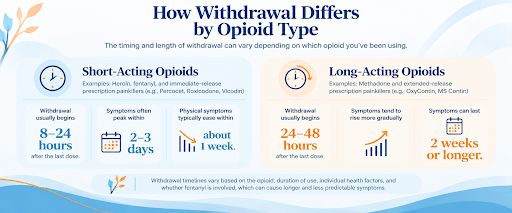
Short-acting opioids include heroin, fentanyl, and immediate-release pills like Percocet, Roxicodone, and Vicodin. Withdrawal usually begins 8 to 24 hours after the last dose and builds quickly. Physical symptoms often peak within 2 to 3 days and ease within about a week.
Fentanyl needs extra care. It can linger in fat tissue, which may stretch out withdrawal, and starting buprenorphine too soon after fentanyl can trigger sudden, severe symptoms. Our dedicated fentanyl detox and heroin detox programs plan for both.
Long-Acting Opioids
Long-acting opioids include methadone and extended-release pills like OxyContin and MS Contin. Withdrawal starts later, often 24 to 48 hours after the last dose. Symptoms tend to rise more gradually but can last longer, sometimes 2 weeks or more.
People who became dependent on prescribed pain medication often worry about pain returning during detox. Our medical team plans for that, too. If prescription opioids are part of the picture along with other medications, our prescription drug detox program can address multiple substances safely.
Opiate Withdrawal Symptoms: What to Expect
Withdrawal follows a fairly predictable pattern, even though timing and intensity vary from person to person. Knowing what’s coming can make it less frightening, and in detox, each stage has a plan.
Early Stage (First 24 Hours)
Early symptoms often feel like a mix of anxiety and the start of the flu. With short-acting opioids they can begin within hours. With long-acting opioids they may not appear until the second day.
- Anxiety, restlessness, and irritability
- Cravings
- Yawning, runny nose, and watery eyes
- Sweating
- Muscle aches
- Trouble falling asleep
This is when our team starts comfort medications and assesses the right time to begin MAT.
Peak Stage (Days 2–5)
Symptoms are usually most intense between days 2 and 5, depending on the opioid. This is the stage where people detoxing alone are most likely to use again.
- Nausea, vomiting, and diarrhea
- Stomach cramps
- Chills, goosebumps, and hot flashes
- Deep aches in muscles and bones
- Fast heartbeat and higher blood pressure
- Severe insomnia
- Intense cravings
Vomiting and diarrhea can cause dehydration, and the strain on the heart can be risky for people with existing health conditions. Round-the-clock care keeps you hydrated, monitored, and as comfortable as possible.
Protracted Withdrawal (PAWS)
After physical symptoms fade, some people have post-acute withdrawal syndrome (PAWS) for weeks or months. As the brain rebalances, you may notice:
- Low mood or difficulty feeling pleasure
- Anxiety and irritability
- Poor sleep and low energy
- Trouble concentrating
- Cravings triggered by stress or reminders of use
PAWS is a normal part of recovery, not a sign that detox didn’t work. Ongoing MAT, therapy, and structured support after detox help you get through it without returning to use.
Medication-Assisted Treatment (MAT) in Opiate Detox
Medication is the backbone of safe, effective opiate detox. MAT eases withdrawal, reduces cravings, and lowers overdose risk, which helps people finish detox and stay in treatment. Your physician will recommend medications based on the opioids you’ve used, your health, and what you want long term.
Suboxone (Buprenorphine)
Buprenorphine is a partial opioid agonist. It activates opioid receptors just enough to relieve withdrawal and cravings, without the high of full opioids. Its effects level off at higher doses, which makes misuse and overdose less likely. In Suboxone, it’s combined with naloxone to discourage misuse.
Timing is key. Buprenorphine binds to receptors more tightly than most opioids, so starting it while another opioid is still active can trigger precipitated withdrawal. Our team uses withdrawal scoring to choose the right moment, and low-dose starting methods when appropriate, especially after fentanyl or methadone use. Many people continue buprenorphine after detox as maintenance treatment.
Methadone
Methadone is a long-acting full opioid agonist. It steadies withdrawal and cravings for a full day or more with a single dose, and it doesn’t cause precipitated withdrawal, so it can start without waiting.
Methadone is started low and increased slowly under close supervision. It’s often a good fit for people with long or heavy use histories. If it’s part of your plan, your team will arrange continued care through a certified opioid treatment program after detox.
Non-Opioid Withdrawal Medications
These medications target specific symptoms and can be used alone or alongside buprenorphine or methadone.
- Clonidine and lofexidine: Calm the nervous system to ease anxiety, sweating, restlessness, and a racing heart
- Anti-nausea medication: Reduces nausea and vomiting
- Anti-diarrheal medication: Helps prevent dehydration
- Pain relievers: Ease muscle and bone aches
- Sleep support: Non-habit-forming options for insomnia
Naltrexone works differently from everything above. It blocks opioid effects entirely, but it can only start once you’ve been opioid-free for about 7 to 10 days. It’s an option after detox, often as a monthly Vivitrol injection.
Don’t detox alone. Call (732) 333-3167 now.
Our Opiate Detox Program at Discovery
Detox at Discovery is designed to be safe, comfortable, and humane. You’ll be cared for by a medical team and a clinical team working together, in a setting that respects your privacy and dignity.
24/7 Medical Monitoring
Nurses and medical staff are on-site day and night. Your care starts with a full medical exam and substance use history, which shapes your detox plan. From there, staff check on you regularly, score your withdrawal symptoms, and adjust medications as you go.
Discovery also uses wearable technology that tracks vital signs like heart rate continuously. It gives nurses real-time information between check-ins so they can catch changes early. Throughout detox, you’ll also have:
- Fluids, meals, and rest to help your body recover
- Screening for co-occurring mental and physical health conditions
- Medication timed and adjusted to your symptoms
Emotional Support and Peer Connection
Detox can stir up fear, shame, and grief along with physical symptoms. Counselors are available throughout your stay to talk, help you manage stress, and start planning for treatment.
As you begin to feel better, you can connect with peers who know what you’re going through, which reminds many people that they’re not alone. With your permission, we also keep your family informed and involved.
What Happens After Opiate Detox?
Detox ends physical dependence, but recovery needs more than that. The weeks after detox carry a higher overdose risk because tolerance is lower, so moving straight into treatment protects your progress.
Most clients step directly from detox into opiate rehab in New Jersey at our Marlboro campus, with no gap in care and no need to start over with a new team. With no more than nine clients in residence, care stays personal. Residential treatment includes:
- Continued MAT, or starting naltrexone once you’re opioid-free
- Individual, group, and family therapy
- Dual diagnosis care for depression, anxiety, PTSD, and other conditions
- Relapse prevention and discharge planning
- Step-down to an intensive outpatient program (IOP) and alumni support
Does Insurance Cover Opiate Detox in NJ?
Most health insurance plans cover at least part of opiate detox, because medically supervised withdrawal is considered necessary medical care. Federal parity laws require most plans to cover substance use disorder treatment on terms similar to other health care, often including MAT. Your costs depend on your plan, your deductible, and whether your benefits are in-network or out-of-network.
Discovery Institute works with many major insurance providers, including Aetna, Blue Cross Blue Shield, UnitedHealthcare, Horizon NJ, and EmblemHealth. Coverage differs from plan to plan, even within the same company.
Our admissions team can check your benefits for detox and the treatment that follows, then explain what’s covered and what you may owe before you arrive.
[CTA] Verify your insurance online or call (732) 333-3167 for a free, confidential benefits check.
Frequently Asked Questions
Most people complete opiate detox in about 5 to 10 days. Withdrawal from short-acting opioids like heroin and fentanyl usually starts within 8 to 24 hours and peaks around days 2 to 3. Long-acting opioids like methadone may take a day or two longer to start and can last 2 weeks or more. Your medical team decides when you’re stable enough to move into treatment.
With medical supervision, opiate detox is safe for most people. The danger comes from detoxing without support. Severe vomiting and diarrhea can cause dehydration, withdrawal can strain the heart, and many people use again during peak symptoms. Because tolerance drops quickly, that return to use can lead to overdose. A medical team prevents and treats these risks around the clock.
Detox is the short-term process of safely getting through withdrawal, usually lasting about a week. MAT is the use of medications like buprenorphine, methadone, or naltrexone to treat opioid use disorder. It often starts during detox and can continue for months or years. Detox treats physical dependence, while MAT supports long-term recovery by reducing cravings and overdose risk.
We don’t recommend detoxing from opiates at home. Without medication, withdrawal is hard to tolerate, and many people use again when symptoms peak, just as their tolerance is dropping. Starting buprenorphine without guidance can also trigger precipitated withdrawal. If you’re thinking about stopping, talk with a medical provider first. Our team can help you find the safest path.
Start Opiate Detox Safely, Any Time
For more than 50 years, Discovery Institute has helped people across New Jersey take the first step away from opioids. Our admissions team answers 24/7, can verify your insurance, and will help you plan a safe arrival. When you’re ready, we’re here.