Fentanyl Rehab in New Jersey
Fentanyl has changed what opioid addiction looks like in New Jersey. It is far stronger than other opioids and often hidden in other drugs, so the risk of overdose is higher than with almost any other substance. If you or someone you love is using fentanyl, getting into structured, medically supported care is one of the most protective steps you can take.
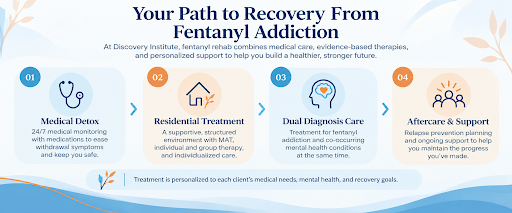
At Discovery Institute, fentanyl rehab takes place in our residential treatment program in Marlboro, where no more than nine clients live and heal at a time. Care combines medication-assisted treatment (MAT), individual and group therapy, and treatment for co-occurring mental health conditions. Every plan is built around the person, not a standard protocol.
Addiction is a medical condition, not a moral failing. Recovery from fentanyl use is possible, and you don’t have to figure out the next step alone.
Call (732) 333-3167 to talk with our admissions team. We’re here 24/7.
Why Fentanyl Addiction Is Different From Other Opioids
Fentanyl is a synthetic opioid. According to the CDC, it is about 100 times stronger than morphine and about 50 times stronger than heroin. Pharmaceutical fentanyl has medical uses, but most fentanyl involved in overdoses today is made illegally.
Three things set it apart from other opioids:
- Tiny amounts can be deadly. A dose small enough to fit on the tip of a pencil can stop someone’s breathing.
- People often don’t know they’re taking it. Illegally made fentanyl is pressed into counterfeit pills and mixed into heroin, cocaine, and other drugs, so the dose is unpredictable.
- It acts fast and wears off fast. That short cycle can drive more frequent use and quicker physical dependence.
These factors are why fentanyl addiction calls for medically supervised, structured care. Trying to stop alone, or cutting back without support, leaves people vulnerable to withdrawal, cravings, and a return to use when tolerance has dropped.
How Fentanyl Affects the Brain
Fentanyl attaches to opioid receptors in the brain, the same receptors that manage pain, mood, and breathing. It crosses into the brain quickly, which produces a rapid wave of relief and euphoria as dopamine floods the reward system.
With repeated use, the brain adapts. It needs more fentanyl to feel the same effect (tolerance), and it starts to depend on the drug just to feel normal. Over time, these changes affect motivation, stress response, and decision-making. That’s why fentanyl addiction isn’t a matter of willpower. It is a change in how the brain functions, and it responds to medical treatment.
Because fentanyl also slows breathing, the line between the dose someone has adjusted to and a dose that causes an overdose can be very thin.
Signs of Fentanyl Addiction
Fentanyl use can be hard to spot, especially when someone believes they are taking a different drug. Common physical and behavioral signs include:
- Pinpoint pupils
- Extreme drowsiness or “nodding off”
- Slowed or shallow breathing
- Confusion or slurred speech
- Nausea, vomiting, or constipation
- Withdrawal symptoms between doses, such as sweating, restlessness, and body aches
- Pulling away from family, work, or school
- Secrecy, money problems, or missing medications
- Continuing to use despite a past overdose or close call
For a closer look at physical, behavioral, and emotional warning signs, see our guide to the signs of fentanyl addiction. If someone is unresponsive or struggling to breathe, call 911 and give naloxone (Narcan) if you have it.
Do You Need Fentanyl Detox Before Rehab?
For most people who are physically dependent on fentanyl, yes. Medical detox is usually the first step, and it makes the rest of treatment possible. It is hard to focus on therapy while your body is going through withdrawal.
Fentanyl withdrawal often starts within 8 to 24 hours of the last dose. Symptoms can include anxiety, muscle and bone pain, sweating, chills, vomiting, diarrhea, insomnia, and intense cravings. Fentanyl can also build up in the body’s fat tissue, which may stretch withdrawal out longer than expected for some people.
Fentanyl also makes starting medication more complex. Beginning buprenorphine too soon after fentanyl use can trigger sudden, severe withdrawal, called precipitated withdrawal. Our medical team times and adjusts medication carefully to keep that from happening.
During fentanyl detox in New Jersey, clients have:
- 24/7 medical monitoring
- Medications to ease withdrawal symptoms and cravings
- Fluids, nutrition, and rest to support physical stabilization
- A clinical assessment that shapes the residential treatment plan
Many people who think they are using heroin are actually exposed to fentanyl. If that sounds familiar, our heroin detox team plans withdrawal care with possible fentanyl exposure in mind. Once you’re stable, you move directly into residential rehab without a gap in care.
What Our Fentanyl Rehab Program Includes
Inpatient fentanyl rehab at Discovery gives you a safe, structured place to heal away from the people, places, and pressures tied to use. Clinical staff are on-site around the clock, and the small residence means your care team knows you, your history, and your goals.
Your treatment plan is built from your detox assessment and updated as you progress. Most plans draw from the services below.
Medication-Assisted Treatment (MAT)
Medication is one of the most effective tools for treating opioid use disorder, and it is a standard of care, not a shortcut. Medications approved for opioid use disorder reduce cravings, ease withdrawal, and lower the risk of overdose. Options may include:
- Buprenorphine (Suboxone): Reduces cravings and withdrawal by partially activating opioid receptors, with a ceiling effect that lowers misuse risk
- Methadone: A long-acting medication that steadies the brain’s opioid system and reduces cravings
- Naltrexone (Vivitrol): Blocks opioid effects entirely and is started once the body is fully clear of opioids
Your physician will talk through each option with you. The right medication depends on your health, your history, and your plans after residential care. Many people continue medication well beyond rehab as part of long-term recovery.
Individual and Group Therapy
Medication steadies the body. Therapy helps you understand why you used, what keeps the cycle going, and how to build a life that supports recovery.
- Individual therapy: One-on-one sessions to work through personal history, trauma, grief, and triggers
- Cognitive behavioral therapy (CBT): Helps you spot and change thought patterns that lead to use
- Dialectical behavior therapy (DBT): Builds skills for handling intense emotions and distress without turning to substances
- Group therapy: Small groups where you practice honest communication and learn from others in recovery
- Family therapy: Helps loved ones understand addiction, repair trust, and prepare for life after treatment
- Holistic and experiential therapies: Mindfulness, meditation, sound bowls, and equine therapy to reduce stress and reconnect with yourself
Dual Diagnosis Care
Many people who use fentanyl are also living with depression, anxiety, PTSD, bipolar disorder, or another mental health condition. Sometimes fentanyl started as a way to cope with that pain. Treating addiction without addressing these conditions leaves a major relapse risk in place.
Our dual diagnosis care treats both at the same time. Clinicians assess mental health from day one, adjust therapy and medication to fit, and coordinate care so neither condition is left behind.
Aftercare and Relapse Prevention
Leaving residential care is a vulnerable time. After weeks without fentanyl, tolerance drops, so a return to use carries a much higher risk of overdose. Planning for that transition starts early in treatment.
Before discharge, you and your team build a plan that may include:
- Stepping down to an intensive outpatient program (IOP) or outpatient care
- Continuing MAT with a prescriber
- A written plan for triggers, cravings, and high-risk situations
- Naloxone and overdose response education for you and your family
- Alumni support and ongoing connection to the Discovery community
Our relapse prevention program gives you practical skills and support for the months after rehab, when steady follow-through matters most.
Fentanyl addiction is a medical emergency. Call (732) 333-3167 now to talk with someone who can help.
How Long Does Fentanyl Rehab Take?
Residential fentanyl rehab at Discovery usually lasts 28 to 90 days, and the right length depends on clinical need, not a set calendar. Detox typically comes first and often takes about a week, though fentanyl withdrawal can run longer for some people.
Common program lengths include:
- 28 to 30 days: Time to stabilize, start medication, and build a foundation in therapy
- 60 days: More time to address co-occurring mental health conditions and practice new coping skills
- 90 days: Extended support for people with longer histories of use, past relapses, or complex needs
Research from the National Institute on Drug Abuse suggests that staying engaged in treatment for at least three months supports better outcomes. That time can combine residential care with step-down outpatient treatment. Your care team reviews progress regularly and adjusts the plan, so you aren’t held longer than you need or discharged before you’re ready.
Does Insurance Cover Fentanyl Rehab in NJ?
Many health insurance plans cover at least part of fentanyl addiction treatment in NJ. Under the Affordable Care Act and federal parity laws, most plans must cover substance use disorder treatment similarly to other medical care. What your plan pays depends on your benefits, your deductible, and whether you have in-network or out-of-network coverage.
Discovery Institute works with many major insurance providers, including:
- Aetna
- Blue Cross Blue Shield
- UnitedHealthcare
- Horizon NJ
- EmblemHealth
Coverage can vary even within the same insurance company, so the most reliable answer comes from checking your specific plan. Our admissions team can review your benefits for detox, residential care, and medication, and explain any out-of-pocket costs before you commit. If your plan isn’t a fit, we’ll help you understand other options.
Verify your insurance online or call (732) 333-3167 for a free, confidential benefits check.
Why Choose Discovery Institute for Fentanyl Rehab?
Discovery Institute has treated addiction in New Jersey since 1970, making it one of the state’s original drug rehab programs. Over more than 50 years, we’ve seen the opioid crisis change, and our care has changed with it.
- A small, close-knit residence: No more than nine clients live on-site at a time, so you get real attention, not a spot in a crowd
- Medical detox through aftercare in one place: You move from detox to residential care to outpatient support without starting over with a new team
- Individualized treatment: Plans are built around your history, health, and goals rather than a fixed protocol
- Dual diagnosis care: Mental health and addiction are treated together from the start
- Joint Commission accreditation: Our programs meet nationally recognized standards for quality and safety
- Family involvement: Loved ones get education and support so recovery continues at home
Our campus is at 80 Conover Rd in Marlboro, in Monmouth County, and we welcome clients from across New Jersey, New York, and beyond.
Frequently Asked Questions
Fentanyl is usually detectable in urine for about 1 to 3 days after use, and sometimes longer with heavy, ongoing use. Blood tests typically detect it for a shorter window, while hair tests can show use for up to 90 days. Many standard drug panels don’t test for fentanyl, so a specific fentanyl test is often needed. How long it stays in your body also affects when withdrawal starts and when certain medications can begin.
Fentanyl withdrawal is rarely life-threatening on its own for otherwise healthy adults, but it can be severe and risky. Vomiting and diarrhea can lead to dehydration, and withdrawal can worsen existing heart or mental health conditions. The greatest danger is returning to use after tolerance has dropped, which sharply raises overdose risk. Medically supervised detox manages symptoms and keeps you safe through this stage.
Most people use health insurance to cover part or all of their care. Coverage depends on your plan, including your deductible and whether you have out-of-network benefits. Our admissions team can check your benefits for free and explain your costs before treatment begins. If insurance won’t cover your stay, ask about other payment options.
There is no single success rate, because recovery looks different for everyone and depends on many factors. The National Institute on Drug Abuse reports relapse rates for substance use disorders of 40% to 60%, similar to other chronic conditions like high blood pressure and asthma. Relapse doesn’t mean treatment failed. It means the plan may need to change. Research also shows that medications for opioid use disorder are linked to a lower risk of overdose death, and staying engaged in care over time tends to support lasting recovery.
Take the First Step Toward Recovery Today
You don’t need to have every answer before you call. Our admissions team can talk through what’s happening, explain your options, and help you plan a safe next step, whether that’s for you or someone you love.
Verify your insurance or call (732) 333-3167 today.