Opiate Rehab in New Jersey
Opiate addiction can start with a prescription after surgery, a pill from a friend, or heroin that turns out to contain fentanyl. However it began, it’s a medical condition that responds to medical treatment. The most effective care combines medication with therapy and support, and that’s the foundation of opiate rehab at Discovery Institute.
Our residential treatment program in Marlboro treats addiction to heroin, fentanyl, and prescription painkillers. Medication-assisted treatment (MAT) is part of care from the start, not an afterthought. It’s paired with individual and group therapy, care for co-occurring mental health conditions, and a plan for life after rehab. With no more than nine clients in residence at a time, your care team gets to know you, not just your diagnosis.
If you’re weighing your options for yourself or someone you love, we can help you understand what treatment involves and what the next step looks like.
Call (732) 333-3167. Admissions is open 24/7.
What Is Opiate Addiction?
Opiate addiction, known clinically as opioid use disorder, is a chronic medical condition in which a person keeps using opioids despite harm to their health, relationships, or responsibilities. It isn’t a lack of willpower. Opioids change how the brain handles pain, reward, and stress, and those changes make stopping very hard without help.
All opioids attach to the same receptors in the brain. With regular use, the body builds tolerance, needing more to feel the same effect, and dependence, feeling sick without the drug. Over time, using becomes less about feeling good and more about avoiding withdrawal. That cycle is what treatment is designed to break.
Types of Opiates We Treat
Discovery treats addiction to the full range of opioids, from street drugs to prescription medications:
- Heroin: An illegal opioid made from morphine, and today often mixed with fentanyl
- Fentanyl: A synthetic opioid far stronger than heroin, found in counterfeit pills and other street drugs
- Oxycodone: A prescription painkiller sold as OxyContin and Percocet, among others
- Hydrocodone: A prescription painkiller found in Vicodin and Norco
- Other prescription opioids: Including morphine, codeine, hydromorphone (Dilaudid), and tramadol
Many people use more than one opioid, or move from pills to heroin when prescriptions become harder to get or afford. Your treatment plan accounts for everything you’ve been using, including possible fentanyl exposure.
Signs and Symptoms of Opiate Addiction
Opiate addiction can be hard to see from the outside, especially when it starts with a valid prescription. Common signs include:
- Taking more than prescribed, or running out of medication early
- Seeing multiple doctors for prescriptions
- Drowsiness, nodding off, or pinpoint pupils
- Slowed breathing, constipation, or nausea
- Flu-like withdrawal symptoms when not using, such as sweating, aches, anxiety, and diarrhea
- Strong cravings and repeated failed attempts to cut back
- Pulling away from family, work, or activities once enjoyed
- Money problems, secrecy, or missing medications at home
If you notice several of these signs in yourself or a loved one, it’s worth talking with a treatment professional. If someone is unresponsive or struggling to breathe, call 911 and give naloxone (Narcan) if you have it.
Do You Need Opiate Detox Before Rehab?
If you’re physically dependent on opioids, medical detox is usually the first step. Withdrawal makes it hard to sleep, eat, or focus, let alone take part in therapy. Detox gets you through that stage safely so rehab can do its work.
Opioid withdrawal typically starts within 6 to 30 hours of the last dose, depending on the drug. Short-acting opioids like heroin and fentanyl bring symptoms on faster, while long-acting prescription opioids may take longer. Symptoms often include anxiety, sweating, muscle aches, nausea, diarrhea, insomnia, and intense cravings. Physical symptoms usually ease within a week to 10 days.
Withdrawal from opioids is rarely life-threatening on its own, but it’s hard enough that many people use again just to feel better. After even a short break, tolerance drops, so that return to use carries a high risk of overdose. Medical detox treats symptoms, protects you during this window, and is often where MAT begins.
Our opiate detox in New Jersey program provides 24/7 medical care and medication to ease withdrawal. Because detox needs differ by substance, we also offer dedicated fentanyl detox and heroin detox programs. When you’re stable, you move straight into residential rehab with the same team.
What Our Opiate Rehab Program Includes
Residential opiate rehab gives you a stable place to live and heal, with clinical staff on-site around the clock. Your plan starts with your detox assessment and changes as you do. Every plan is built from four core parts.
Medication-Assisted Treatment (MAT)
MAT is the most well-supported treatment for opiate addiction. Research shows that medications for opioid use disorder help people stay in treatment, reduce illicit opioid use, and lower the risk of fatal overdose. At Discovery, medication is a standard part of care, offered alongside counseling, never instead of it.
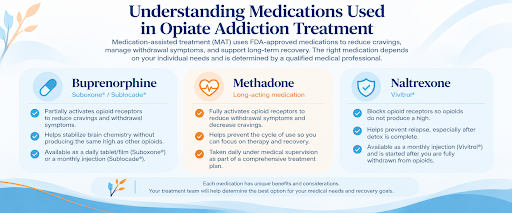
There are three FDA-approved medications for opioid use disorder, and each works differently:
| Medication | How it works | Who it may suit |
| Buprenorphine (Suboxone, Sublocade) | Partially activates opioid receptors to relieve cravings and withdrawal, with a ceiling effect that limits misuse | Many people starting recovery, including those coming off heroin, fentanyl, or pills |
| Methadone | Fully activates opioid receptors and lasts all day, steadying cravings and withdrawal | People with long or heavy use histories, or who haven’t done well on buprenorphine |
| Naltrexone (Vivitrol) | Blocks opioid effects completely, with no opioid activity of its own | People who are fully opioid-free (7 to 10 days) and prefer a non-opioid option |
Your physician will explain the benefits and trade-offs of each and help you choose. Many people stay on medication long after rehab, and that’s a sign of treatment working, not a crutch. Before discharge, you and your family will also learn how to get naloxone and use it in an emergency.
Individual and Group Therapy
Medication eases the physical pull of opioids. Therapy addresses what’s underneath, including pain, trauma, stress, and the habits built around use.
- Individual therapy: Private sessions with your counselor to work through your history and goals
- Cognitive behavioral therapy (CBT): Changes the thoughts and patterns that lead to use
- Dialectical behavior therapy (DBT): Builds skills for managing strong emotions and distress
- Group therapy: Connection, accountability, and practice with others in recovery
- Family therapy: Helps loved ones heal, rebuild trust, and support recovery at home
- Holistic therapies: Mindfulness, meditation, sound bowls, and equine therapy to reduce stress
For people whose opioid use started with chronic pain, therapy also explores safer ways to manage pain going forward.
Dual Diagnosis Care
Depression, anxiety, PTSD, and bipolar disorder often occur alongside opiate addiction. Opioids can numb emotional pain for a while, which makes stopping even harder when those conditions go untreated.
Our dual diagnosis care treats mental health and addiction together. Your team assesses both from the start and builds therapy and medication around the full picture.
Aftercare and Relapse Prevention
The months after rehab carry real risk, because tolerance is lower than it was during active use. A strong aftercare plan keeps support in place while you rebuild daily life.
Before you leave, you and your team will plan for:
- Ongoing MAT with a community prescriber or opioid treatment program
- Step-down care in an intensive outpatient program (IOP) or outpatient therapy
- Strategies for triggers, cravings, and high-risk situations
- Alumni connection and peer support
Our relapse prevention program helps you practice these skills before and after discharge.
Ready to start recovery? Call (732) 333-3167 now.
How Long Does Opiate Rehab Take?
Residential opiate rehab at Discovery typically lasts 28 to 90 days, based on clinical need rather than a set schedule. Detox usually comes first and takes about 5 to 10 days.
- 28 to 30 days: Stabilize on medication, build a routine, and start core therapy work
- 60 days: Go deeper on underlying issues like trauma, pain, or co-occurring mental health conditions
- 90 days: Extra time for long histories of use, past relapses, or complex medical needs
The National Institute on Drug Abuse notes that staying in treatment for at least three months tends to support better outcomes. That time doesn’t all have to be residential. Many people step down to outpatient care, and MAT often continues for months or years. Your team reviews your progress regularly and adjusts your plan along the way.
Does Insurance Cover Opiate Rehab in NJ?
Many insurance plans cover opiate rehab, including detox, residential care, and medication. Federal parity laws require most plans to cover substance use disorder treatment on terms similar to other medical care. What you pay depends on your plan, your deductible, and whether your benefits are in-network or out-of-network.
Discovery Institute works with many major insurance providers, including:
- Aetna
- Blue Cross Blue Shield
- UnitedHealthcare
- Horizon NJ
- EmblemHealth
Benefits vary widely, even between plans from the same company. Our admissions team can review your coverage for each stage of care and explain any costs before you start. If your plan isn’t a fit, we’ll help you understand your other options.
Verify your insurance online or call (732) 333-3167 for a free, confidential benefits check.
Why Choose Discovery Institute for Opiate Rehab in NJ?
Discovery Institute opened in 1970 as one of New Jersey’s first drug rehab programs. We’ve treated opioid addiction through every phase of the crisis, from prescription painkillers to heroin to fentanyl, and our care has evolved with the evidence.
- MAT built into care: Medication is offered as a standard part of treatment, with physicians who understand opioid use disorder
- A small residence: No more than nine clients at a time, so treatment stays personal
- One continuum of care: Detox, residential treatment, and outpatient support with a team that already knows you
- Individualized plans: Built around your history, health, and goals rather than a fixed program
- Dual diagnosis care: Mental health treated alongside addiction from day one
- Joint Commission accreditation: Our programs meet national standards for quality and safety
- Family involvement: Education and support so loved ones can help recovery last
Our campus is at 80 Conover Rd in Marlboro, Monmouth County. We welcome clients from across New Jersey, New York, and beyond.
Frequently Asked Questions
The most effective approach combines medication with counseling and ongoing support. Buprenorphine, methadone, and naltrexone are the three FDA-approved medications for opioid use disorder. Research links them to longer time in treatment and a lower risk of overdose death. Pairing medication with therapy, treatment for co-occurring conditions, and aftercare addresses both the physical and emotional sides of addiction.
“Opiates” originally meant drugs made directly from the opium poppy, such as morphine and codeine. “Opioids” is the broader term for every drug that acts on the brain’s opioid receptors. That includes heroin, prescription painkillers like oxycodone and hydrocodone, and synthetic drugs like fentanyl. Today, many people use the two words to mean the same thing. Opiate rehab and opioid rehab refer to the same treatment.
Yes. Many people continue medication for months or years after rehab, and research supports long-term use for lasting recovery. Before you leave, your team will help you set up ongoing care with a prescriber or opioid treatment program so there’s no gap. Decisions about tapering are made with your doctor, when and if you’re ready.
The main medications are buprenorphine (Suboxone or Sublocade), methadone, and naltrexone (Vivitrol). Buprenorphine and methadone reduce cravings and withdrawal, while naltrexone blocks opioids from having any effect. During detox, non-opioid medications such as clonidine may also ease symptoms like anxiety, sweating, and nausea. Your physician will recommend the right option based on your health and goals.
Find Your Path to Recovery From Opiate Addiction
Recovery from opiate addiction is possible, and you don’t have to plan it alone. Our admissions team can answer your questions, check your coverage, and help you take the next step whenever you’re ready.
Verify your insurance or call (732) 333-3167 today.