Alcohol Rehab in New Jersey
If you or someone you love is struggling with alcohol, you’re probably looking for something specific: a real program, in New Jersey, that can actually help – not a directory listing or a national call center. This page is for you.
Discovery Institute has been treating alcohol use disorder in New Jersey since 1970. Our residential alcohol rehab program is built around one idea: long-term recovery takes more than just stopping drinking. It takes understanding why drinking started, treating what’s underneath it, and building a life that doesn’t need alcohol to function. Here’s what that looks like in practice.
What Is Alcohol Rehab?
Alcohol rehab is a structured treatment program designed to help people stop drinking and stay stopped. It’s different from detox. Alcohol detox in New Jersey is the medical process of getting alcohol safely out of your system – it typically lasts 3 to 7 days and addresses the physical side of withdrawal. Rehab begins where detox ends: it addresses the behavioral, psychological, and social factors that drive drinking.
Residential alcohol rehab – also called inpatient rehab – means you live at the facility for the duration of treatment. You’re not commuting to appointments. You’re in a structured, supportive environment where recovery is the only focus. For most people with moderate to severe alcohol dependence, residential care gives them the best chance of lasting change.
Do I Need Detox Before Rehab?
For many people with alcohol dependence, yes – and this is important to understand. Alcohol withdrawal can be medically dangerous. Unlike withdrawal from most other substances, stopping alcohol abruptly can cause seizures, delirium tremens (DTs), and in some cases, death. This isn’t meant to scare you – it’s meant to make sure you’re safe.
If you’ve been drinking heavily for an extended period, you should not attempt to stop on your own. Medically supervised detox ensures that withdrawal is managed safely, with clinical staff on-site around the clock. Medications like Librium or Valium can be used to reduce seizure risk and ease the discomfort of withdrawal.
Discovery Institute provides both detox and residential treatment, so you can move directly from one to the other without changing facilities, losing momentum, or starting over with a new clinical team.
Not everyone with a drinking problem needs a full medical detox. If your use has been intermittent or your dependence is mild, our clinical team will assess you at intake and determine the right starting point. When in doubt, call us – we’ll be honest with you about what you need.
What Happens During Residential Alcohol Rehab?
The short answer: a lot of structured, purposeful work – but in an environment that feels more like a community than a hospital. Here’s what the core components look like.
Medical Assessment and Stabilization
When you arrive, our clinical team completes a thorough intake assessment. This covers your health history, the extent of your alcohol use, any medications you’re currently taking, and any co-occurring mental health concerns. The goal is to understand the full picture before building a treatment plan, not to fit you into a standard protocol.
If you’ve come directly from detox, the stabilization phase may be brief. If you’re arriving sober or from a previous detox elsewhere, the assessment determines whether additional medical monitoring is needed before the full therapeutic schedule begins.
Individual and Group Therapy
Therapy is where the real work of rehab happens. At Discovery Institute, clients spend a significant portion of each day in therapy – both one-on-one with a counselor and in group sessions with peers.
Individual therapy gives you a private space to work through the specific experiences and patterns behind your drinking. Group therapy builds something different: the realization that you’re not alone in this, and the skills that come from working alongside others who understand what you’re facing. Both matter. Neither replaces the other.
Our therapists use evidence-based approaches including Cognitive Behavioral Therapy (CBT) and Dialectical Behavior Therapy (DBT), which have strong track records in treating alcohol use disorder. CBT helps you identify and change the thought patterns that lead to drinking. DBT gives you concrete tools for managing emotions and tolerating distress without reaching for alcohol.
Dual Diagnosis Treatment
A significant number of people with alcohol use disorder also live with a co-occurring mental health condition – depression, anxiety, PTSD, bipolar disorder, or others. These aren’t separate problems. They’re interconnected, and treating one without the other rarely works.
Discovery Institute has a dedicated dual diagnosis program. If you’re dealing with both alcohol dependence and a mental health condition, both will be addressed as part of your treatment plan – not patched up separately, not left for later. This integrated approach is one of the most important things to look for in any residential program.
Family Involvement
Alcohol doesn’t just affect the person drinking. Families carry the weight of it too – and they’re often the most important factor in someone’s long-term recovery. Our program includes family therapy and education as part of the treatment process. Family members learn how addiction works, how to communicate differently, and how to be a source of support rather than unintentionally enabling continued use.
This isn’t about blame. It’s about giving everyone involved the tools to move forward.
Ready to start?
How Long Does Alcohol Rehab Take?
Most residential programs are structured around 28, 60, or 90-day stays. A 30-day program is the most common entry point, but research consistently shows that longer treatment produces better long-term outcomes – particularly for people with severe dependence, a history of relapse, or a co-occurring mental health condition.
At Discovery Institute, length of stay is determined by your clinical team based on your individual progress – not a calendar. Some people are ready to transition to a less intensive level of care after 30 days. Others benefit from continuing residential treatment for longer. What matters is that you leave with the stability and skills to stay well, not that you meet an arbitrary end date.
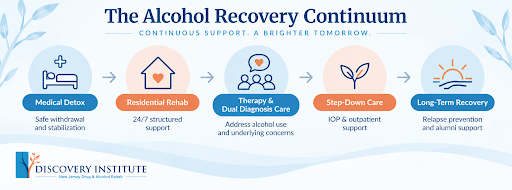
After residential treatment, most clients transition to an Intensive Outpatient Program (IOP) or another level of step-down care. This provides continued structure and support while allowing you to begin reintegrating into daily life.
What to Expect After Rehab
Finishing residential treatment is a major achievement. It’s also just the beginning of long-term recovery. The transition out of a 24/7 structured environment is one of the most vulnerable periods for relapse, which is why what happens after matters as much as the program itself.
Every client at Discovery Institute leaves with a discharge plan and a relapse prevention plan tailored to their specific triggers, high-risk situations, and coping strategies. This isn’t a generic pamphlet. It’s a personalized document built with your counselor over the course of treatment.
Common elements of an aftercare plan include:
- Step-down to IOP or outpatient therapy
- Connection to a sponsor or recovery support community
- Ongoing psychiatric care if needed for co-occurring conditions
- Sober living arrangements if returning home isn’t safe or stable
- Alumni program participation to stay connected to the recovery community
Discovery Institute’s alumni program keeps you connected to staff and peers long after you leave. Recovery isn’t a 30-day event. Our relationship with clients doesn’t end at discharge.
Does Insurance Cover Alcohol Rehab in NJ?
In most cases, yes – and often more than people expect. The Mental Health Parity and Addiction Equity Act requires most insurance plans to cover substance use disorder treatment at the same level as other medical conditions. This means residential rehab is covered, not just outpatient visits.
Discovery Institute accepts most major insurance plans, including:
- Aetna
- Blue Cross Blue Shield
- United Healthcare
- Horizon NJ Health
- Emblem Health
- Oxford Healthcare
- Humana
- Tricare (for veterans and military families)
- And many others
The fastest way to find out what your plan covers is to call us at (844) 433-1101 or use our online insurance verification tool. One of our admissions counselors will review your benefits and tell you exactly what to expect before you make any decisions. There’s no obligation and no cost to check.
Why Choose Discovery Institute for Alcohol Rehab in NJ?
There are a lot of treatment programs in New Jersey. Here’s what’s different about Discovery.
We’ve been doing this since 1970. Discovery Institute is one of New Jersey’s original drug and alcohol rehab programs. Over 50 years of treating addiction means we’ve seen what works, what doesn’t, and how to build a program that produces lasting recovery – not just short-term sobriety.
Treatment plans are individualized, not standardized. Every client goes through a comprehensive assessment at intake. Your treatment plan is built around your history, your needs, and your goals – not a standard protocol. Two people with alcohol use disorder may have very different paths through the same program.
We treat the whole picture. If you have a co-occurring mental health condition, it gets treated – not set aside. Our dual diagnosis program ensures that the psychological drivers of drinking are addressed alongside the physical and behavioral ones.
Family is part of the process. Addiction affects families. Recovery involves them too. We include family therapy and education as a core part of treatment, not an optional add-on.
We’re licensed and accredited. Discovery Institute meets rigorous licensing and accreditation standards. You’re not taking a chance on an unvetted program. You’re working with a facility that has been vetted, inspected, and holds itself to clinical best practices.
Our residential treatment program provides around-the-clock care. 24/7 staffing means clinical support is always available, not just during business hours. That matters most in the early days of treatment, when cravings and emotional difficulties are most intense.
If you want to see the facility, meet the team, or just ask questions before making any decisions, we encourage you to call. There’s no pressure. We’d rather you take the time to make the right choice than feel rushed into anything.
To learn more about whether alcohol use disorder is affecting you or someone you care about, visit our page on the signs of alcoholism.
Frequently Asked Questions
The cost of alcohol rehab in New Jersey varies depending on the level of care, the length of stay, and your insurance coverage. Many clients at Discovery Institute pay little to nothing out of pocket because we accept most major insurance plans, including Aetna, Blue Cross Blue Shield, United Healthcare, Horizon NJ, and many others. The best first step is to call us at (844) 433-1101 or use our online insurance verification tool – we’ll tell you exactly what your plan covers before you commit to anything.
Most people completing residential alcohol rehab stay for 28 to 90 days, with 30-day programs being the most common starting point. The right length depends on how severe the dependence is, whether a co-occurring mental health condition is present, and how a person is responding to treatment. Research consistently shows that longer stays produce better long-term outcomes, so we don’t rush the process.
Success rates for alcohol rehab vary, but treatment significantly improves outcomes compared to no treatment. According to the National Institute on Alcohol Abuse and Alcoholism, about one-third of people who address their alcohol problems have no further symptoms one year after treatment. Success is influenced by the quality of the program, whether dual diagnosis conditions are treated, the degree of family involvement, and the strength of a person’s aftercare and relapse prevention plan – all of which are built into our program at Discovery Institute.
Call (844) 433-1101 – available 24/7. Our admissions team is ready to answer your questions, verify your insurance, and help you take the next step.