
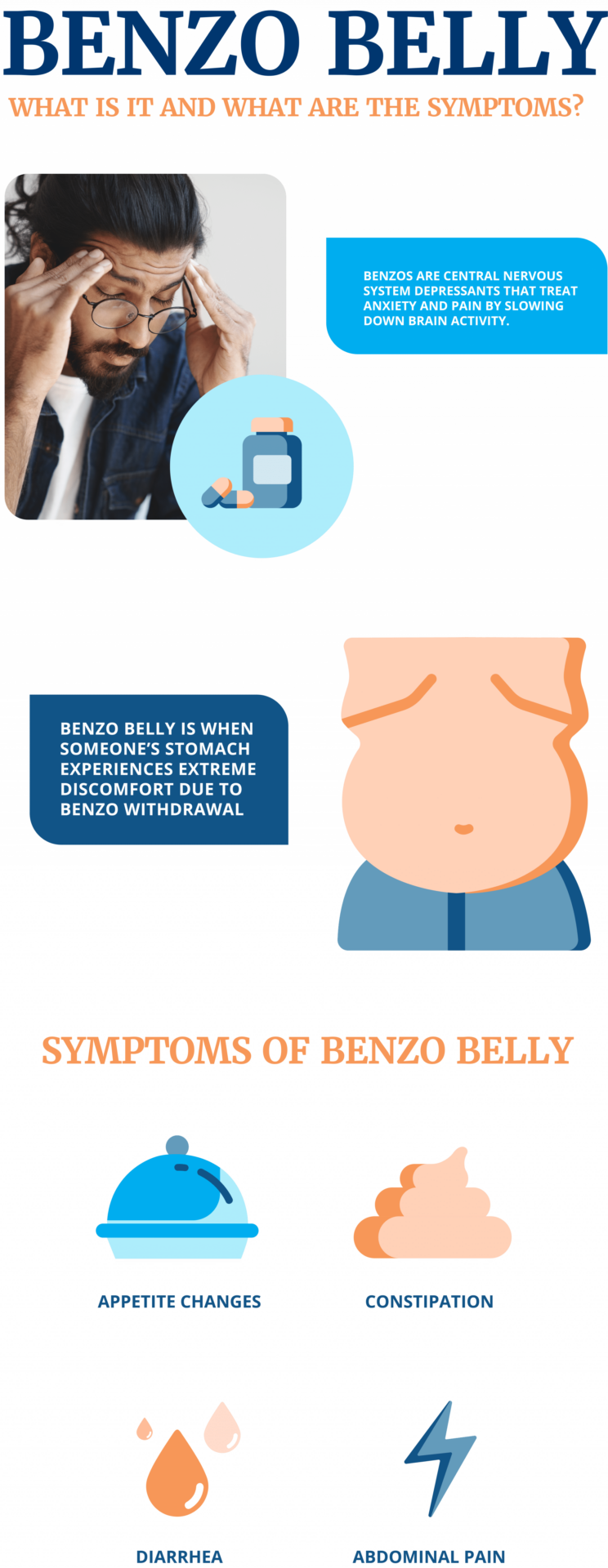
“Benzo belly” is a colloquial term referring to severe gastrointestinal issues often experienced during benzodiazepine withdrawal. It is thought to be caused by the drug affecting the gut-brain axis.
The symptoms of “benzo belly” typically include diarrhea, constipation, abdominal pain, and appetite changes.
What Causes “Benzo Belly”?
 Benzos affect almost every cell in the body, including the gastrointestinal tract (GI). When you stop using benzos, your body goes crazy, trying to function without the drug. For this reason, you may experience “benzo belly.”
“Benzo belly” typically begins in the protracted phase of withdrawal. It may last for several weeks after your last dose. Although symptoms get better over time, some people may have symptoms for years.
How Long Do Benzo Withdrawals Last?
For most drugs, withdrawal symptoms typically last 1 to 2 weeks after the last dose. But, benzos are different. They can have long post-acute withdrawal symptoms (PAWS).
Symptoms of “benzo belly” may include alternating constipation and diarrhea. Eating certain foods can make the symptoms worse. But, your diet can help ease some symptoms of “benzo belly.”
So, how long do benzo withdrawals last? “Benzo belly” typically lasts for several weeks after the last dose. However, sometimes “benzo belly” can last up to a year or more.
What are the Symptoms of “Benzo Belly”?
Symptoms of “benzo belly” include:
- Abdominal pain
- Appetite changes
- Constipation
- Diarrhea
- Lower abdominal pain
If you are prescribed benzos, it’s vital to speak to your doctor before stopping. If you are taking benzos without a prescription, you should talk to an addiction center like Discovery Institute for treatment options.
Is There a Cure for “Benzo Belly”?
In short, no – you just have to be patient and wait for the symptoms to go away. But, a change in your diet can offer relief. Furthermore, some foods can make your symptoms worse. “Benzo belly’ can make you feel like you have a food allergy, but it’s withdrawal symptoms.
What Prescription Drugs are Benzodiazepines?
Benzodiazepines or “benzo’s” is a class of prescription drugs sold under many different brand names. Some of the most common benzo’s include:
- Xanax
- Klonopin
- Librium
- Valium
- Ativan
How do Benzodiazepines Affect Your Body?
Benzodiazepines or benzos are central nervous system (CNS) depressants. They treat anxiety and pain by slowing down brain activity. They work by increasing the activity of GABA, a neurotransmitter in the brain.
Benzos also enhance dopamine levels in the brain. This chemical messenger is involved in pleasure and reward. For this reason, people can become dependent and misuse their medication. After a few weeks of regular use, the brain can stop producing these chemicals naturally.
Signs of Benzodiazepine Dependence
The signs that you are addictioned or dependanant on Benzodiazepines may include:”
- Fatigue
- Paranoia
- Shakiness
- Cold sweats
- Mood swings
- Anxiety attacks
- Intrusive thoughts
- Increased anxiety
- Lack of focus and concentration
- Increased heart rate
The Dangers of Prescription Benzodiazepines
Benzos offer great benefits for anxiety and pain. But, they are for short-term use. For example, prolonged use of benzos for anxiety can make your anxiety worse.
When your body starts expecting the drug to stimulate neurotransmitters, it needs more to get the desired effect. This is called tolerance. But, once you begin to feel withdrawal symptoms without the drug, it has become a dependence.
Withdrawal symptoms are very uncomfortable. As a result, most people start using again. This is why attending a medical detox program can help with benzo withdrawal pain relief and maintain recovery.