Fentanyl Detox Center in New Jersey
Stopping fentanyl is one of the hardest parts of recovery, and one of the riskiest to try alone. Withdrawal can be intense, cravings can be overwhelming, and fentanyl’s strength means a single return to use after a few days off can lead to overdose. Detox with medical support makes that first step safer and more manageable.
At Discovery Institute in Marlboro, our fentanyl detox program offers 24/7 medical care, medications that ease withdrawal and cravings, and a team that treats you with dignity from the moment you arrive. It’s part of our medically supervised detox in New Jersey, with a direct path into residential treatment once you’re stable.
Whether you’re calling for yourself or someone you love, you don’t need to have everything figured out. Our admissions team can walk you through what happens next.
Call (732) 333-3167. Admissions is open 24/7.
Why Fentanyl Withdrawal Requires Medical Supervision
Fentanyl is a synthetic opioid that the CDC estimates is about 100 times stronger than morphine and 50 times stronger than heroin. Its doses are measured in micrograms, so even a slightly larger amount than someone expects can stop their breathing.
That potency changes what withdrawal looks like. Fentanyl leaves the bloodstream quickly but can be stored in fat tissue, so symptoms may start fast and last longer than with other opioids. Starting medication is also more delicate, because beginning buprenorphine too soon can cause sudden, severe withdrawal.
The biggest risk comes after the worst symptoms fade. After even a few days without fentanyl, tolerance drops. Returning to the same amount someone used before can lead to overdose. Medical detox treats symptoms, protects against that risk, and connects you to care for what comes next.
Many people who use heroin, pills, or other opioids are exposed to fentanyl without knowing it. If that’s your situation, our heroin detox and opiate detox teams plan care with possible fentanyl exposure in mind.
Early Fentanyl Withdrawal Symptoms (8–24 Hours)
Early symptoms usually begin within 8 to 24 hours of the last dose, and sometimes sooner. They often feel like the start of a bad flu combined with strong anxiety.
- Restlessness, anxiety, and irritability
- Strong cravings
- Yawning, runny nose, and watery eyes
- Sweating and chills
- Muscle aches
- Trouble sleeping
Peak Symptoms (36–72 Hours)
Symptoms usually reach their most intense point between 36 and 72 hours. This is when people trying to quit alone are most likely to use again, just to make the discomfort stop.
- Nausea, vomiting, and diarrhea
- Stomach cramps
- Goosebumps and hot and cold flashes
- Deep bone and muscle pain
- Fast heart rate and higher blood pressure
- Dilated pupils
- Severe insomnia and intense cravings
Vomiting and diarrhea can cause dehydration, which is one reason 24/7 medical care matters during this stage. For most people, physical symptoms ease within 5 to 10 days.
Protracted Withdrawal (Weeks to Months)
Some people have lingering symptoms for weeks or months after detox. This is sometimes called post-acute withdrawal. It isn’t a sign that detox failed. It’s the brain slowly rebalancing after long-term opioid use.
- Low mood or trouble feeling pleasure
- Anxiety and irritability
- Poor sleep and fatigue
- Trouble concentrating
- Cravings that come and go, often triggered by stress
Ongoing medication, therapy, and support in continued fentanyl addiction treatment help people manage this stage without returning to use.
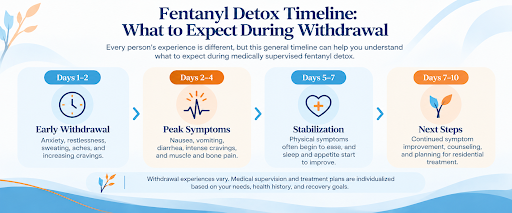
Fentanyl Detox Timeline: What to Expect Day by Day
Most people complete fentanyl detox in about 5 to 10 days, though everyone’s timeline is different. How long you used, how much, other substances, and your overall health all play a role. Here’s a general picture of what a stay looks like.
| Timeframe | What you may feel | What our team does |
| Admission (day 1) | Anxiety, early withdrawal, uncertainty about what’s ahead | Welcomes you, completes a medical and substance use assessment, and builds your detox plan |
| Days 1–2 | Restlessness, sweating, aches, rising cravings | Monitors vitals around the clock, starts comfort medications, and times opioid medication so it starts safely |
| Days 2–4 | Peak symptoms: nausea, diarrhea, pain, insomnia, strong cravings | Adjusts medication, keeps you hydrated and nourished, and checks in often |
| Days 5–7 | Physical symptoms ease, sleep and appetite begin to return | Stabilizes medication and begins counseling and planning for next steps |
| Days 7–10 | Feeling steadier, though tired and emotionally raw | Confirms your treatment plan and coordinates a direct move into residential care |
You won’t be rushed out before you’re ready, and you won’t be held longer than you need. Your medical team decides when you’re stable based on how you’re doing, not a fixed date.
Medication-Assisted Treatment (MAT) for Fentanyl Detox
Medication-assisted treatment (MAT) is the standard of care for opioid withdrawal and opioid use disorder. The right medications ease symptoms, quiet cravings, and lower overdose risk, which makes it far more likely that you’ll finish detox and move into treatment. Your physician chooses medications based on your health, your use history, and your goals.
Suboxone (Buprenorphine/Naloxone)
Buprenorphine partially activates the brain’s opioid receptors. That’s enough to relieve withdrawal and cravings, but its effects level off at higher doses, which lowers the risk of misuse and overdose. In Suboxone, it’s combined with naloxone to discourage misuse.
With fentanyl, timing matters. Buprenorphine binds to opioid receptors more strongly than fentanyl does, so starting it while fentanyl is still active can push fentanyl off the receptors and cause precipitated withdrawal. Our medical team uses withdrawal scoring and careful dosing approaches, including low-dose starts when appropriate, to begin buprenorphine safely and comfortably.
Methadone
Methadone is a long-acting opioid medication that fully activates opioid receptors, so it can relieve withdrawal without the risk of precipitated withdrawal. Because it lasts a long time in the body, it can steady symptoms and cravings throughout the day.
Methadone is started at a low dose and increased gradually under close medical supervision. When it’s the right fit, your team will also plan how you’ll continue it after detox, since ongoing methadone treatment is provided through certified opioid treatment programs.
Non-Opioid Withdrawal Medications
Non-opioid medications ease specific symptoms and can be used on their own or alongside buprenorphine or methadone.
- Clonidine and lofexidine: Calm the body’s fight-or-flight response, reducing anxiety, sweating, restlessness, and a racing heart
- Anti-nausea medication: Eases nausea and vomiting
- Anti-diarrheal medication: Helps prevent dehydration
- Pain relievers: Ease muscle and bone aches
- Sleep support: Non-habit-forming options to help with insomnia
Naltrexone, which blocks opioids entirely, isn’t a detox medication. It can only begin once your body has been opioid-free for about 7 to 10 days, so it’s an option for the next stage of treatment.
Don’t wait for withdrawal to get worse. Call (732) 333-3167 now.
What Our Fentanyl Detox Program Includes
Detox at Discovery is built around your safety, your comfort, and your dignity. From admission, you’ll have a medical team watching over your physical health and a clinical team supporting you emotionally.
24/7 Medical Monitoring
Nurses and medical staff are on-site around the clock. They track your symptoms, adjust medications as withdrawal changes, and respond quickly if anything shifts.
Discovery also uses wearable technology that tracks vital signs like heart rate continuously. This gives nurses real-time information between check-ins, so they can spot changes early and act fast.
Your detox care also includes:
- A full medical exam and substance use history at admission
- Regular withdrawal assessments to guide medication timing
- Fluids, nutrition, and rest to help your body recover
- Screening for co-occurring physical and mental health conditions
Emotional and Peer Support
Withdrawal affects more than the body. Fear, guilt, and grief often come up during detox, and you shouldn’t have to face them alone.
Counselors are available throughout your stay to help you work through what you’re feeling and prepare for treatment. As you feel steadier, you can begin connecting with peers who understand what you’re going through. We also keep families informed and involved, with your permission, so the people who care about you know how to help.
What Happens After Fentanyl Detox?
Detox treats physical dependence, but it isn’t the whole of recovery. The weeks after detox are when tolerance is lowest and cravings can still be strong, so moving straight into treatment protects the progress you’ve made.
At Discovery, most clients step directly from detox into fentanyl rehab in New Jersey on the same campus, with the same team. Our residence houses no more than nine clients at a time, so care stays personal. Residential treatment typically includes:
- Continuing buprenorphine or methadone, or starting naltrexone (Vivitrol) once you’re opioid-free
- Individual, group, and family therapy
- Treatment for co-occurring conditions like depression, anxiety, and PTSD
- Relapse prevention and discharge planning
- Step-down to an intensive outpatient program (IOP) and alumni support
Does Insurance Cover Fentanyl Detox in NJ?
Most health insurance plans cover at least part of medical detox, since it’s considered medically necessary care for opioid withdrawal. Federal law requires most plans to cover substance use disorder treatment on similar terms to other medical care. Your costs depend on your plan, your deductible, and whether you have in-network or out-of-network benefits.
Discovery Institute works with many major insurance providers, including Aetna, Blue Cross Blue Shield, UnitedHealthcare, Horizon NJ, and EmblemHealth. Coverage varies from plan to plan, even with the same company.
Our admissions team can check your benefits for detox and residential care. We’ll explain what’s covered and what you may owe before you arrive, so there are no surprises.
Verify your insurance online or call (732) 333-3167 for a free, confidential benefits check.
Frequently Asked Questions
Most people complete fentanyl detox in about 5 to 10 days. Symptoms usually start within 8 to 24 hours of the last dose and peak around days 2 to 3. Because fentanyl can be stored in fat tissue, some people have a longer withdrawal. Your medical team decides when you’re stable enough to move into the next stage of care.
Fentanyl detox is safe when it’s medically supervised. The risks come mostly from detoxing alone: dehydration from vomiting and diarrhea, strain on people with heart or other health conditions, and overdose if someone uses again after their tolerance has dropped. In a medical detox program, staff watch for these problems around the clock and use medication to keep you safe and comfortable.
The main medications are buprenorphine (often as Suboxone) and methadone, which relieve withdrawal and cravings. Non-opioid medications such as clonidine or lofexidine ease anxiety, sweating, and restlessness, and others treat nausea, diarrhea, pain, and sleep problems. Naltrexone may be used later, after you’ve been opioid-free for 7 to 10 days. Your physician chooses medications based on your needs.
We don’t recommend detoxing from fentanyl at home. Withdrawal is hard to get through without medication, so many people use again during peak symptoms, when tolerance is already dropping and overdose risk is high. Starting buprenorphine on your own can also trigger precipitated withdrawal. If you’re thinking about stopping, talk with a medical provider first. Our team can help you figure out the safest option.
Start Fentanyl Detox With Support Any Time, Day or Night
For more than 50 years, Discovery Institute has helped people in New Jersey take the first step out of addiction. Our admissions team answers calls 24/7, can check your insurance, and will help you plan a safe arrival. All you need to do is reach out.
Verify your insurance or call (732) 333-3167 today.