
Are You Dealing With Dry Drunk Syndrome?
Getting sober involves a lot more than putting down the alcohol and drugs and stepping away. Recovery involves a lot of soul-searching, emotional work, introspection, and an entire perspective shift. Numbing oneself with substances stunts emotional growth and causes our moral compass to malfunction. Removing chemicals from the body is certainly the first step but it doesn’t fix years of maladjustment to life.
To be truly healthy and whole in sobriety, addicts and alcoholics need long-term therapy and support, and a willingness to change behavior and defective thinking patterns. Some people don’t make these vital changes, and as a result, end up sober and miserable. That’s why some people with decades of clean time are still angry, resentful, depressed, and hurting. If you are sober and you’re still miserable, you may be suffering from the condition known in recovery circles as “dry drunk syndrome.”
What is Dry Drunk Syndrome?
People use alcohol or drugs addictively for many reasons- genetic predisposition to substance dependence, trauma, social conditioning or home environment, inability to cope with life circumstances, or negative core beliefs about themselves or their lives. For many people who suffer from addiction, drugs and alcohol are temporary “solutions” to these problems, before they become bigger problems themselves.
For that reason, simply quitting substances without changing one’s lifestyle or other behaviors and thought processes simply isn’t enough. Taking away the substance doesn’t fix the problem that the addict or alcoholic was trying to solve through the use of the substance in the first place. When someone doesn’t replace their addiction with a healthy pattern of living or a new solution to dealing with life, they can end up feeling empty, discontent, and full of anguish. This is what’s referred to as “dry drunk syndrome.” It’s an addict or an alcoholic with no drugs or alcohol, and also no solution.
Recovery from addiction isn’t just the absence of substances, but rather a way of life. When using and drinking are someone’s entire way of life, they will absolutely need a new lifestyle to replace that one when they decide to get sober. Otherwise, the pain, fear, and emptiness that prompted the abuse of drugs and alcohol returns, and the individual ends up suffering through abstinence or returning to their addiction.
How Do I Know if I’m a Dry Drunk?
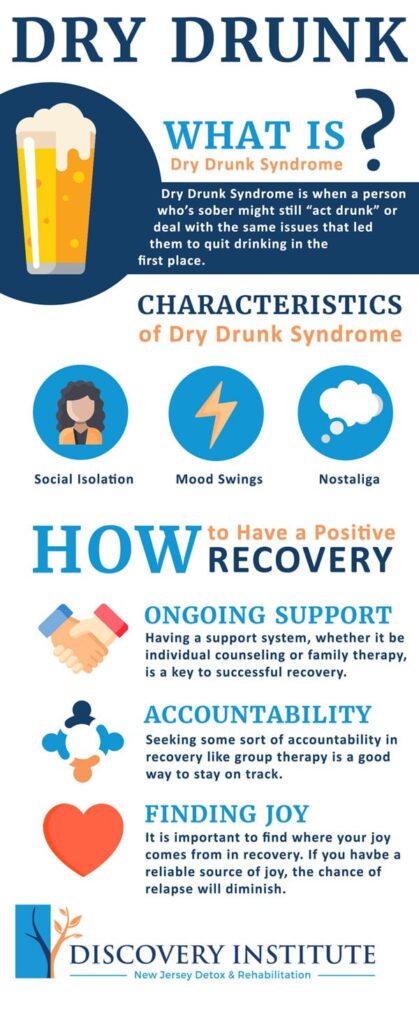 Like any affliction, dry drunk syndrome affects individuals in different ways, and it can be avoided and corrected through different methods based on the person’s goals, a threshold for emotional pain, and their own particular definition of fulfillment. The risk factors for developing dry drunk syndrome include social isolation, lack of emotional support, disengagement from recovery programs (such as twelve-step fellowships or recommended treatment aftercare programs like IOP), being uninvolved in therapy, not treating a co-occurring disorder, lack of healthy coping skills, unaddressed resentments or anger, staying in a toxic relationship or home environment, being dishonest about cravings or feelings, and engaging in outside behavioral addiction such as compulsive gambling or shopping. All of these factors can cause a sober person to fail to address their core issues or the emptiness that fuels and results from active addiction.
Someone who is suffering from dry drunk syndrome may:
- Hold onto resentments or anger
- Feel superior to others or struggle with ego; conversely, they may have feelings of inferiority or not being good enough
- Regularly compare themselves and their recovery to others
- Lash out emotionally, display angry outbursts or experience mood swings that are unrelated to a mood disorder
- Engage in compulsive behaviors or non-substance-related addictions, like sex addiction, gambling addiction, or binge-eating
- Become emotionally or physically abusive to family, friends, or those around them
- Lie or manipulate
- Feel empty or unfulfilled
- Isolate themselves from family or friends
- Engage in high-risk behavior
- Deny, minimize, or rationalize their addiction
- Fantasize about drinking or using drugs, or experience a return of the obsession to use substances
- Display disproportionate reactions to life events, such as overreacting to minor inconveniences, or not experiencing any emotional reaction to intense experiences
- Reminisce on the “good times” of their drug use or drinking and forget about the tragic consequences of their addiction
- Stop regularly attending 12 step meetings, support groups, therapy, doctor appointments, or other recommended recovery activities
- Struggle to relate to others in recovery
- Develop destructive coping mechanisms like self-harm
- Fail to treat mental illnesses, like eating disorders, which can be physically and emotionally harmful
- Refuse to admit to or recognize their behavior and the impact it has on themselves, their family, and their relationships
Is Mental Illness Involved?
It is impossible to discuss dry drunk syndrome without discussing mental health. If you are a dry drunk, chances are you also struggle with depression, anxiety, or some other form of mental illness. In fact, from what we know regarding the causes of dry drunk syndrome, you most likely dealt with mental illness before your addiction. Mental illness could have even been the cause of your dry drunk syndrome. There is an unfortunate connection between mental illness and addiction. Below you will find some of the symptoms of depression.
- Loss of interest in everyday activities
- Guilt
- Feelings of anxiety, mood swings, or sadness.
- Insomnia, sleeplessness, restless.
- Excessive hunger, fatigue, loss of appetite.
- Lack of concentration, slowness in cognitive ability, thoughts of suicide ideation.
- Poor appetite.
- Repeatedly going over thoughts.
If you have noticed, many of these symptoms may be similar to that of being dry drunk. Dry drunkenness is connected to mental illness. This is why it is important to treat the whole person. In the next section, we will discuss co-occurring disorders and why they are important to understand.